Free physics question bank
constrain motion and newton second law in constrain motion questions with solutions
Practice Newtons law of motion and Friction for JEE Main, JEE Advanced, NEET, and Classes 11–12. Attempt each question, then open it for the full solution.
Showing 1–10 of 69 questions
- Multi-correctdifficultNewtons law of motion and Friction
Two equal masses A and B are connected by a massless string over the pulley arrangement shown and released from rest. Which statements are correct?
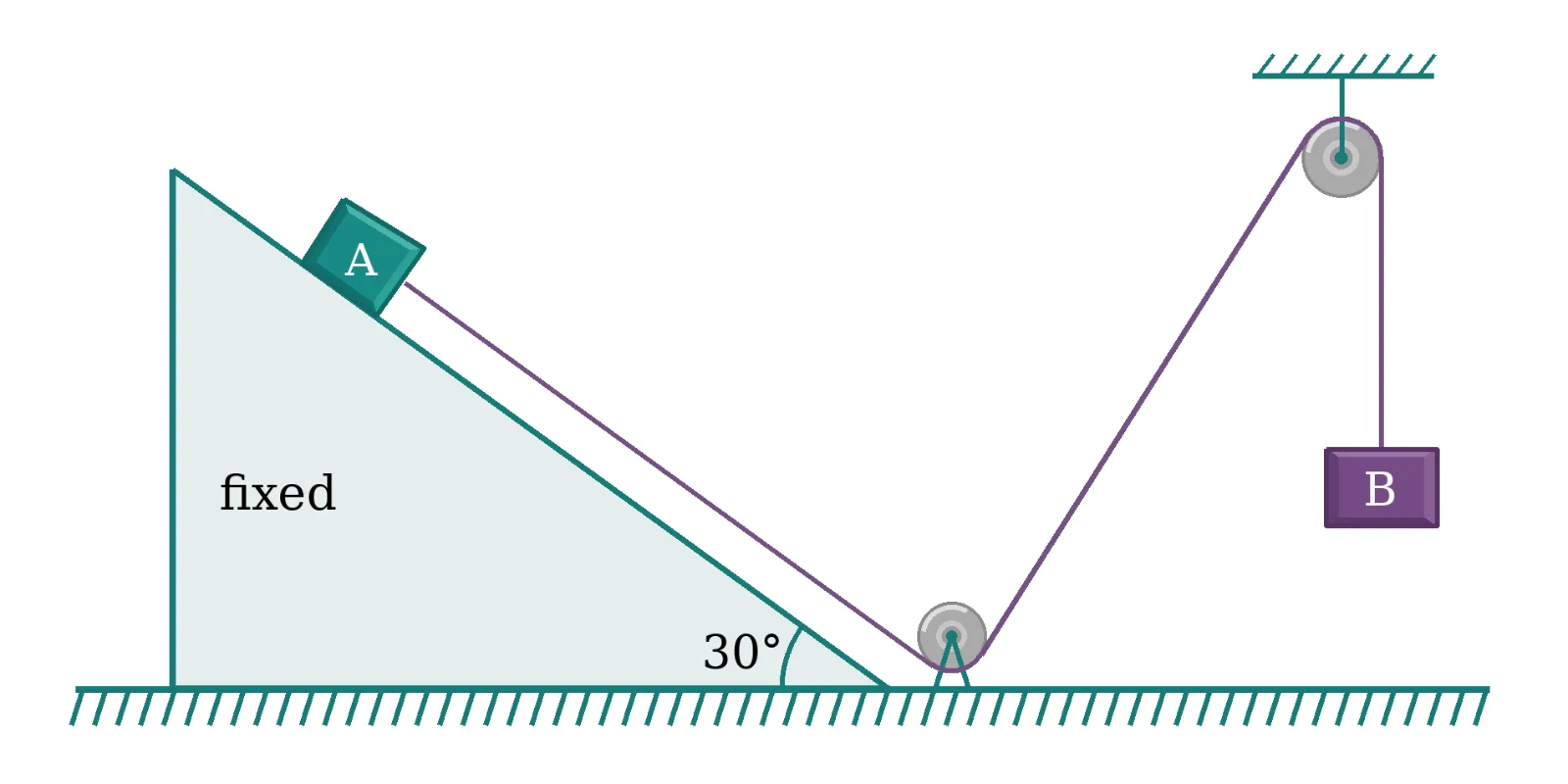
Select all that apply
JEE MainsJEE Advanced
Open question & full solution → - MCQmediumNewtons law of motion and Friction
A vertical rod slides down with acceleration a while remaining in contact with a wedge that accelerates horizontally. If the wedge angle is θ, the wedge acceleration is:
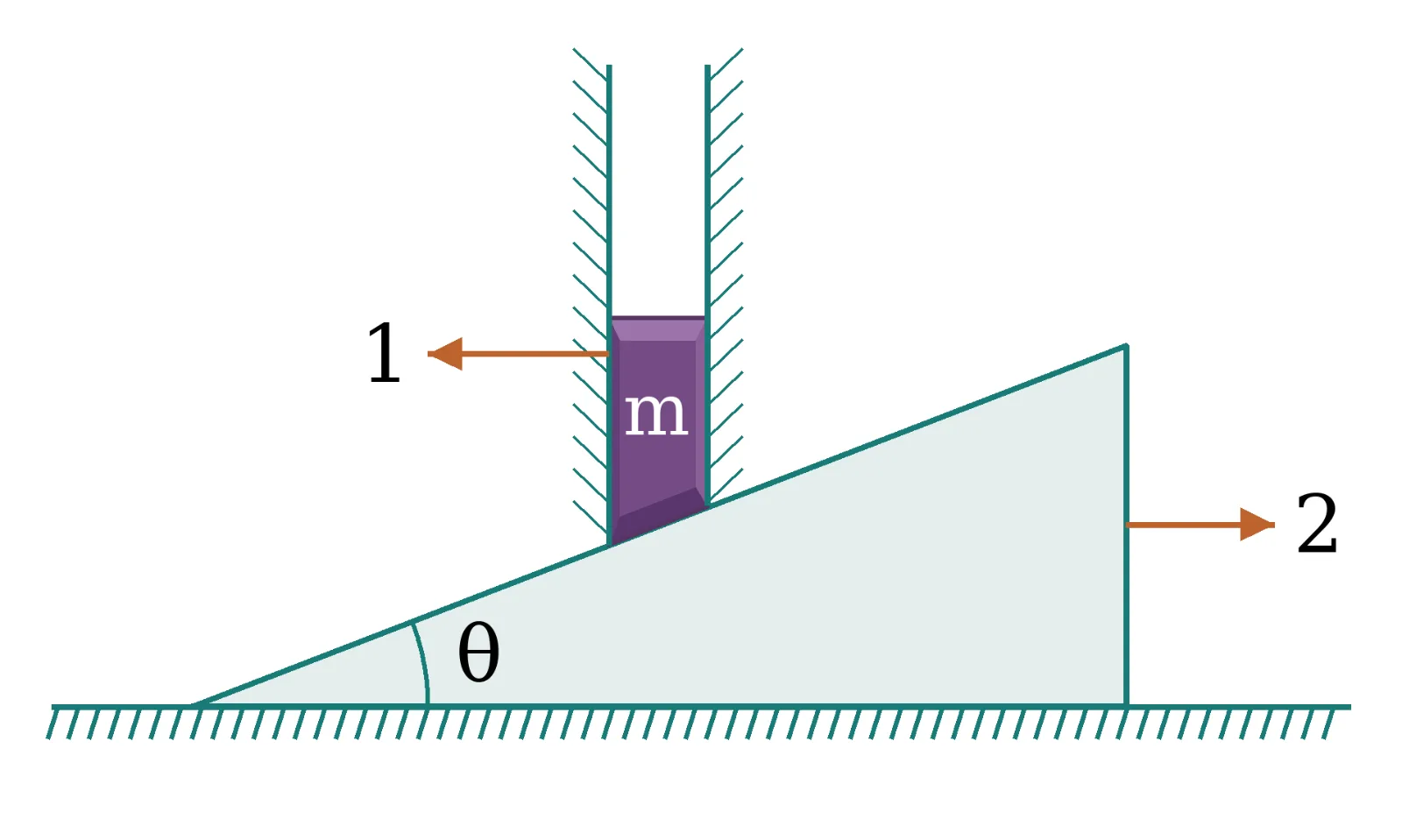
Options
JEE MainsNEET
Open question & full solution → - NumericdifficultNewtons law of motion and Friction
In the multi-pulley arrangement shown, the indicated velocities are A upward 8 m s⁻¹, B downward 2 m s⁻¹, C upward 2 m s⁻¹, D downward 1 m s⁻¹ and the free end F moves right at 4 m s⁻¹. Find the speed of block E in m s⁻¹.
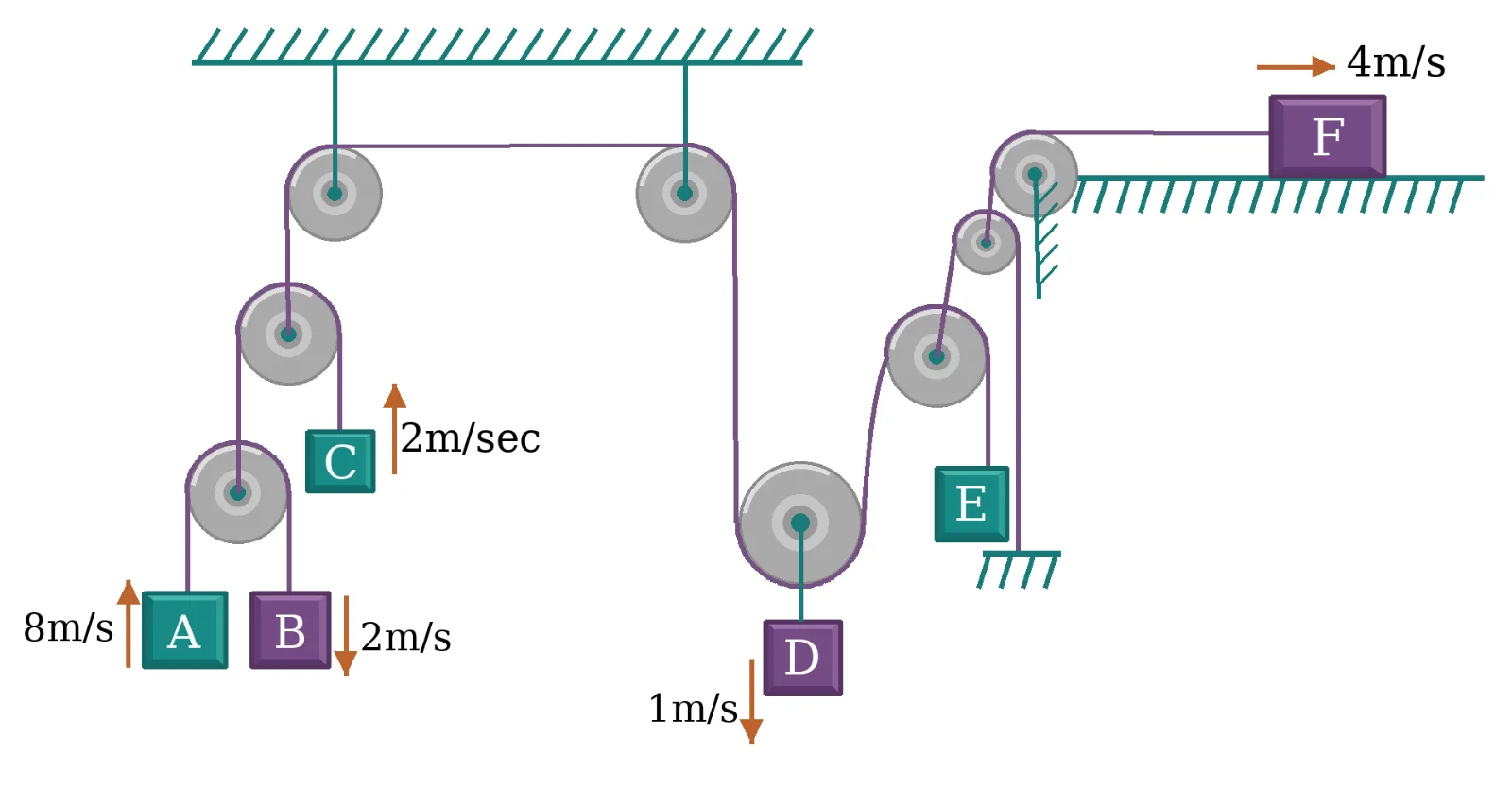
JEE MainsJEE Advanced
Open question & full solution → - MCQmediumNewtons law of motion and Friction
Two blocks A and B move horizontally with speeds v₁ and v₂ while connected to a fixed pulley by strings making angles θ₁ and θ₂ with the horizontal. The ratio v₁/v₂ is:
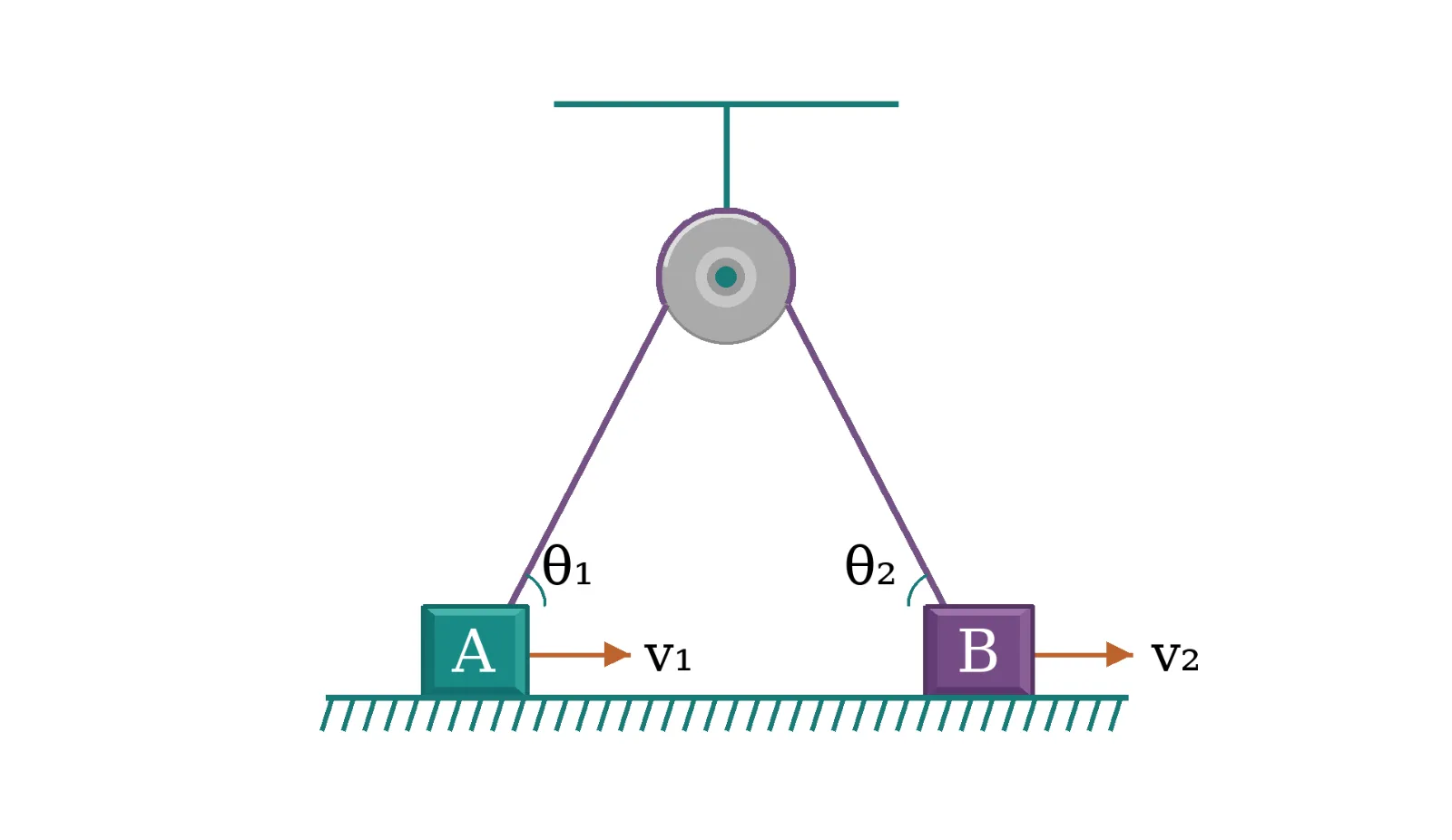
Options
JEE MainsNEET
Open question & full solution → - NumericdifficultNewtons law of motion and Friction
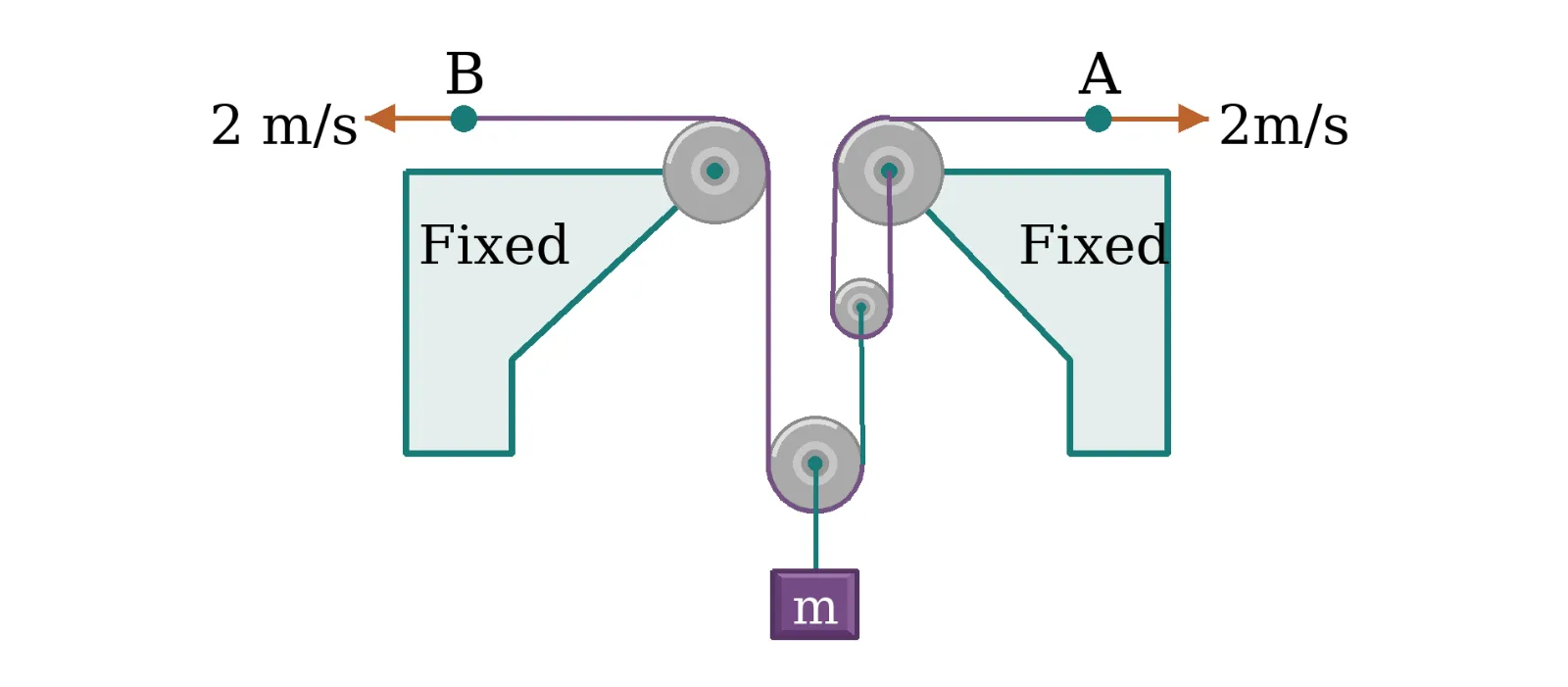
In the pulley system shown, cable ends A and B each move outward with speed 2 m s⁻¹. Find the upward velocity of the load m in m s⁻¹.
JEE MainsJEE Advanced
Open question & full solution → - MCQmediumNewtons law of motion and Friction
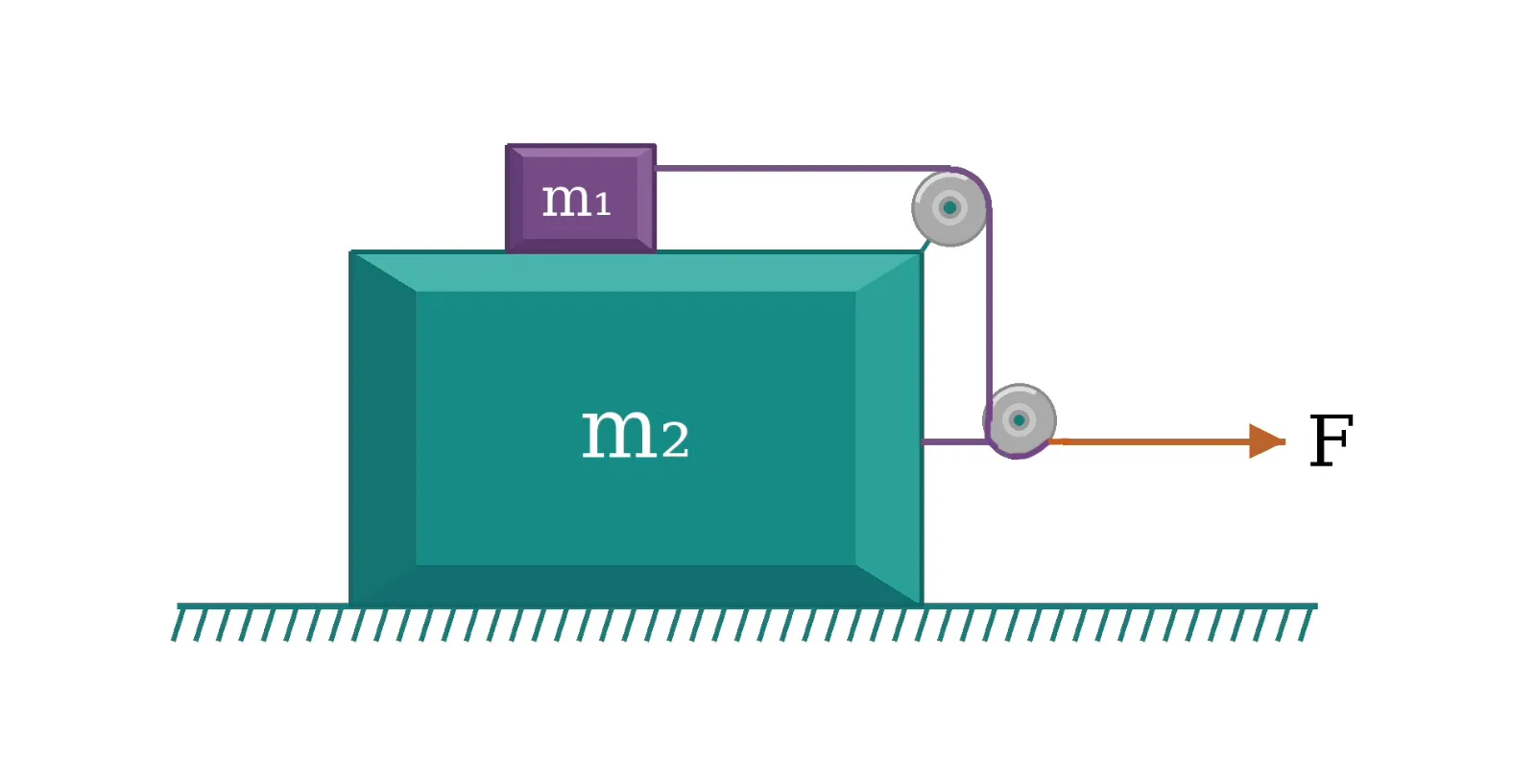
In the pulley arrangement shown all surfaces are smooth. m₁=20 kg, m₂=30 kg and F=180 N. The accelerations are:
Options
JEE MainsNEET
Open question & full solution → - IntegermediumNewtons law of motion and Friction
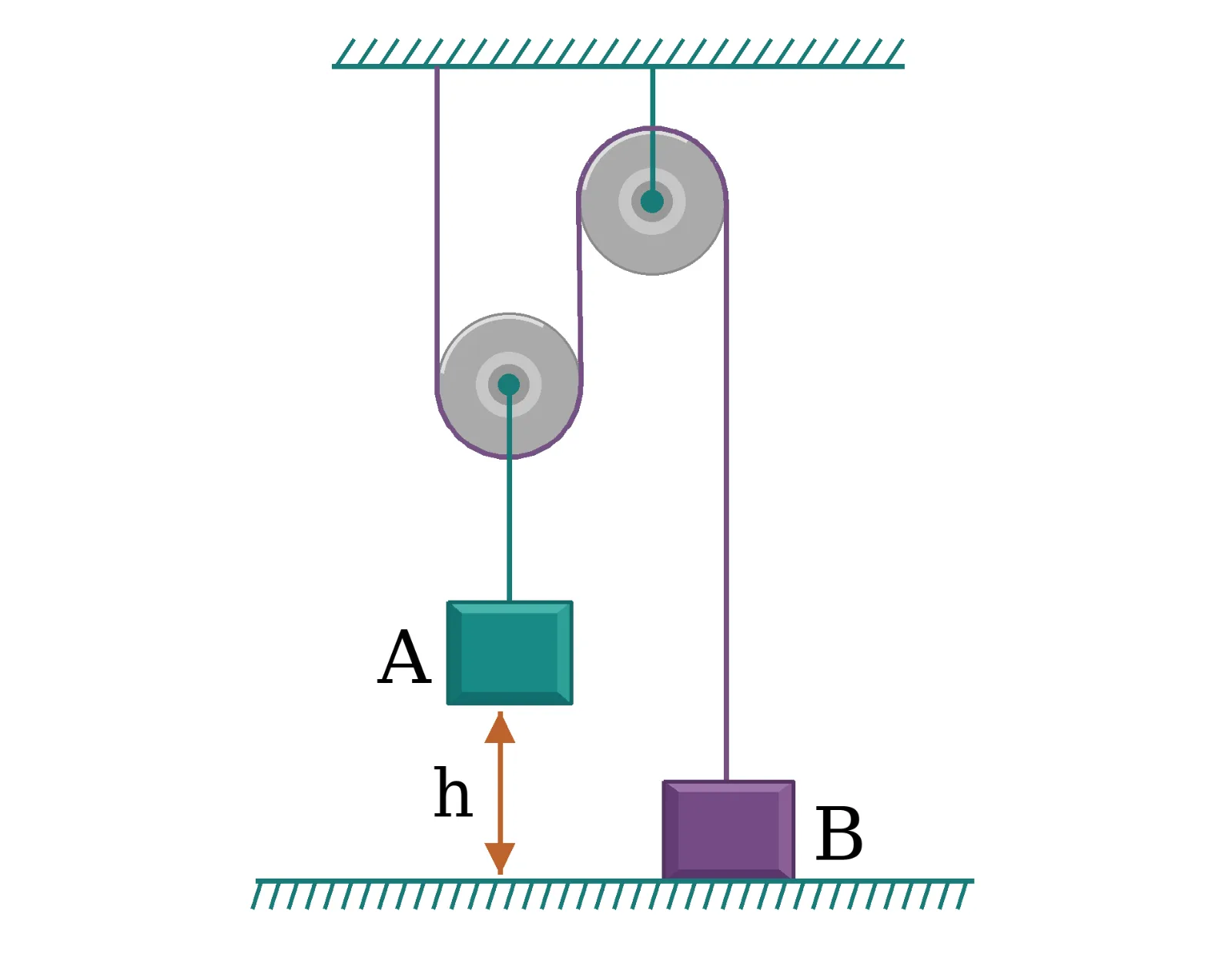
In the pulley arrangement shown, mass A is four times mass B. At one instant B is released while the system is already moving; A falls through h=20 cm before hitting the ground. Take g=10 m s⁻². Find the maximum additional height, in cm, reached by B above its initial position.
JEE MainsNEET
Open question & full solution → - MCQmediumNewtons law of motion and Friction
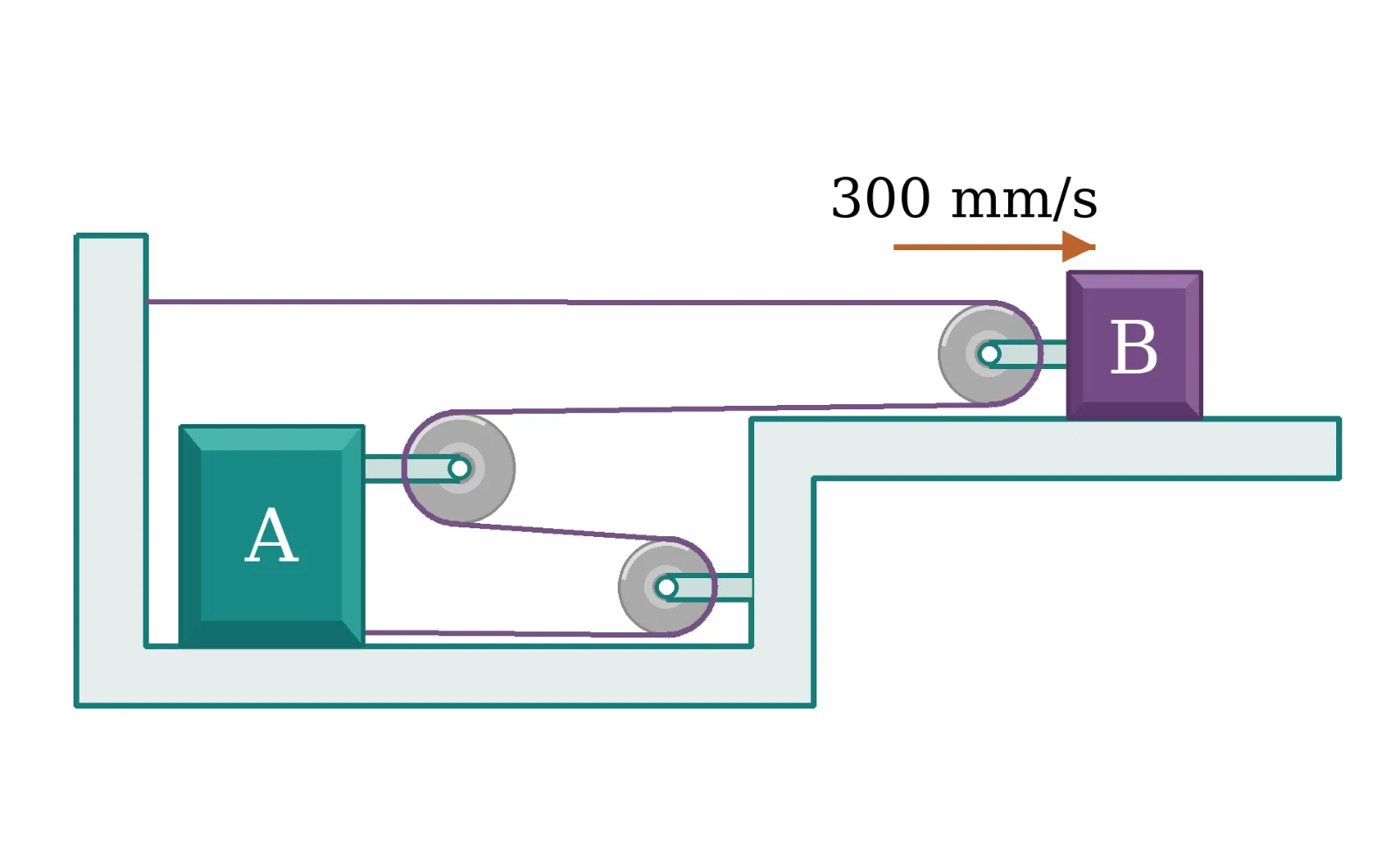
Block B moves to the right at 300 mm s⁻¹ in the pulley arrangement shown. The velocity of block A is:
Options
JEE MainsNEET
Open question & full solution → - MCQmediumNewtons law of motion and Friction
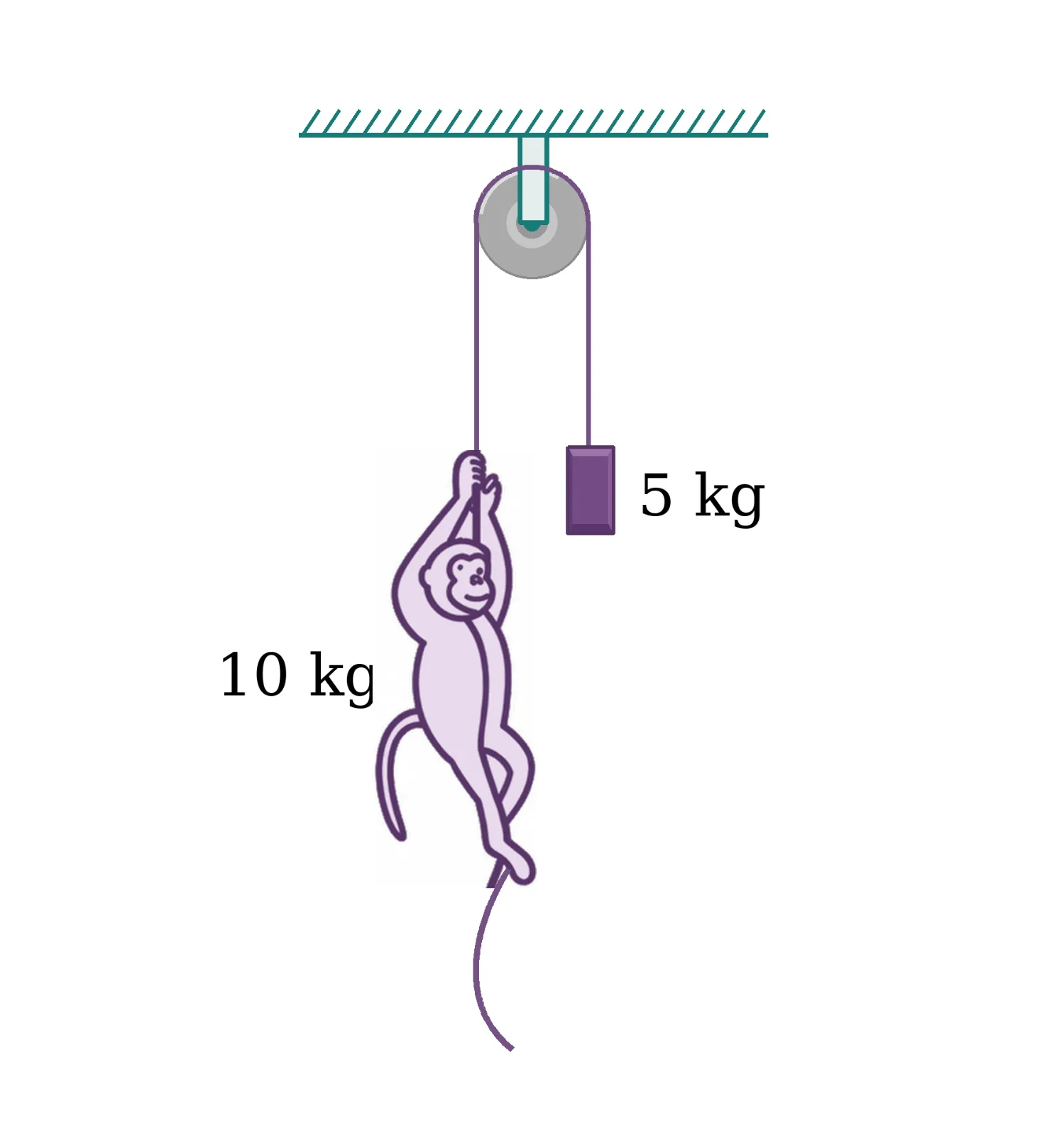
A 10 kg monkey holds a rope passing over a fixed pulley; a 5 kg mass hangs on the other side. If the monkey exerts 80 N on the rope, its acceleration relative to the rope is:
Options
JEE MainsNEET
Open question & full solution → - MCQmediumNewtons law of motion and Friction
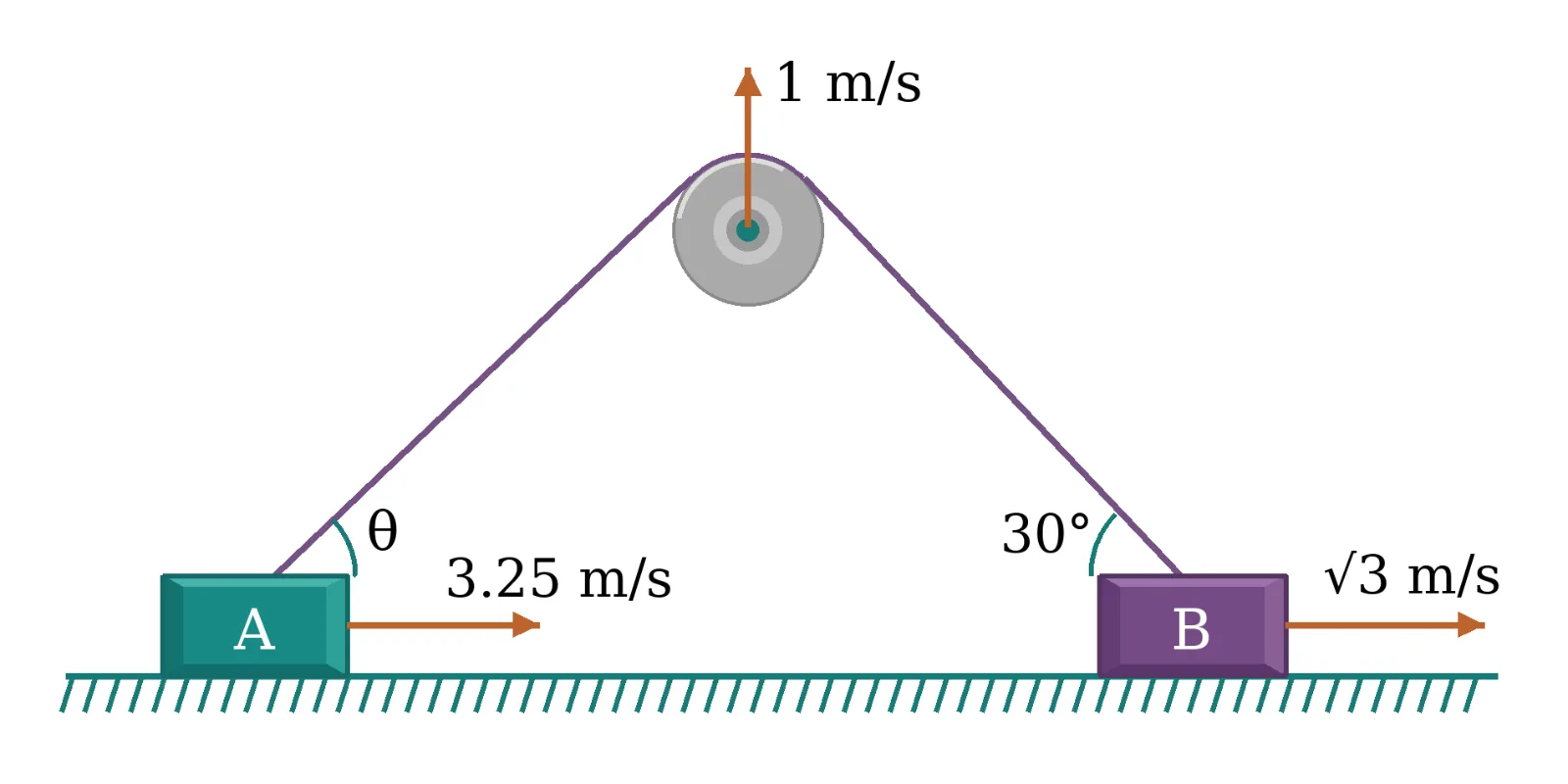
At an instant the top pulley moves upward at 1 m s⁻¹, block A moves right at 3.25 m s⁻¹ and block B moves right at √3 m s⁻¹; the right string makes 30° with the horizontal. Find θ as shown.
Options
JEE MainsNEET
Open question & full solution →