Free physics question bank
newton second law and problem based on it questions with solutions
Practice Newtons law of motion and Friction for JEE Main, JEE Advanced, NEET, and Classes 11–12. Attempt each question, then open it for the full solution.
Showing 1–10 of 127 questions
- MCQeasyNewtons law of motion and Friction
A 10 kg block rests on a rough horizontal surface, μ=0.5. If a horizontal force of 100 N acts on it, find acceleration (g=10 m s⁻²).
Options
AIPMT 2002NEET
Open question & full solution → - MCQmediumNewtons law of motion and Friction
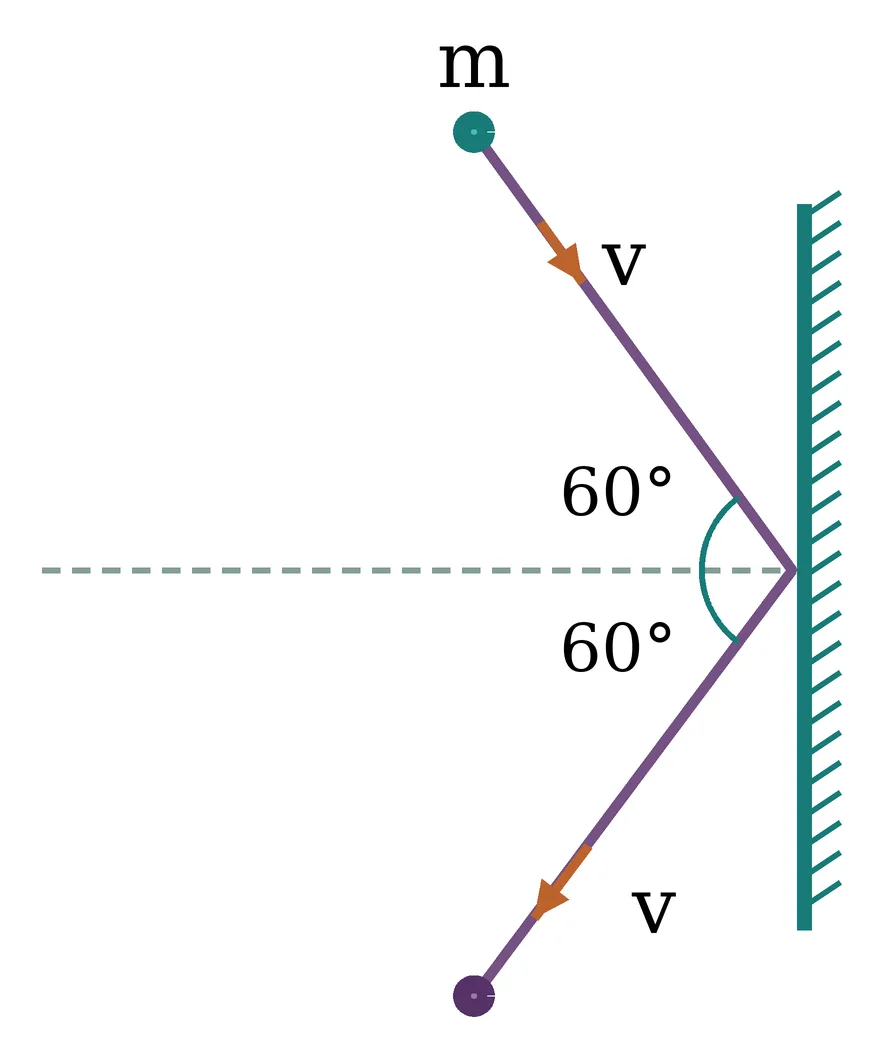
A rigid ball of mass m strikes a rigid wall as shown at 60° to the normal, and rebounds symmetrically without losing speed v. The impulse imparted by the wall is:
Options
NEET Phase-II 2016
Open question & full solution → - MCQeasyNewtons law of motion and Friction
A particle of mass m has position vector r = a(cosωt, sinωt). The direction of the net force on the particle is:
Options
JEE Mains 2025 4 April Morning Shift
Open question & full solution → - MCQmediumNewtons law of motion and Friction
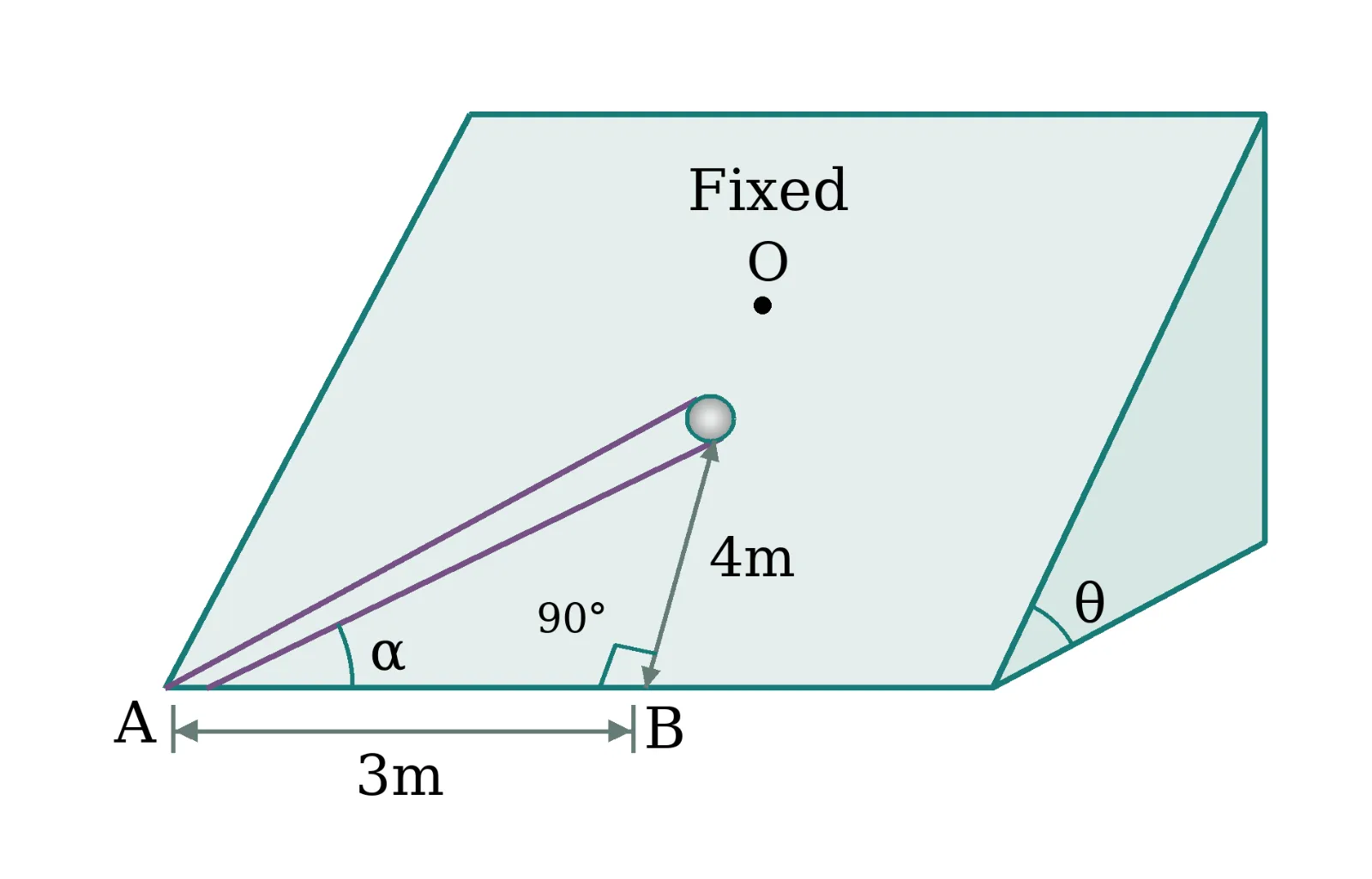
A small groove is cut in a fixed 30° inclined surface. In plan view the groove has OA=4 m and OB=3 m as shown. A steel ball starts from rest at O and slides along the groove. Take g=10 m s⁻². Its speed at A is:
Options
JEE MainsNEET
Open question & full solution → - MCQdifficultNewtons law of motion and Friction
Five persons A,B,C,D,E pull a 100 kg cart. With all five, acceleration is 3 m s⁻² east. If A stops, acceleration is 1 m s⁻² west. If only B stops, acceleration is 24 m s⁻² north. What is the cart acceleration when only A and B pull in their original directions?
Options
JEE MainsJEE Advanced
Open question & full solution → - MCQmediumNewtons law of motion and Friction
A balloon of mass m is descending with downward acceleration a (a<g). How much mass must be removed so that it ascends with acceleration a? Assume buoyant force stays constant.
Options
AIPMT 2014NEET
Open question & full solution → - MCQeasyNewtons law of motion and Friction
At any instant the velocity of a particle of mass 500 g is (2t î + 3t² ĵ) m s⁻¹. If the force acting on the particle at t = 1 s is (î + xĵ) N, then the value of x is:
Options
JEE Mains8 April 2023Shift 1Morning Shift
Open question & full solution → - MCQeasyNewtons law of motion and Friction
A force of 10 N produces acceleration 1 m s⁻² in a body. Find its mass.
Options
AIPMT 1996NEET
Open question & full solution → - MCQmediumNewtons law of motion and Friction
A 20 kg monkey climbs a vertical rope that can safely support a hanging mass of 25 kg but breaks for larger loads. Using g=10 m s⁻², find maximum upward acceleration the monkey can have without breaking the rope.
Options
AIPMT 2003NEET
Open question & full solution → - Multi-correctdifficultNewtons law of motion and Friction
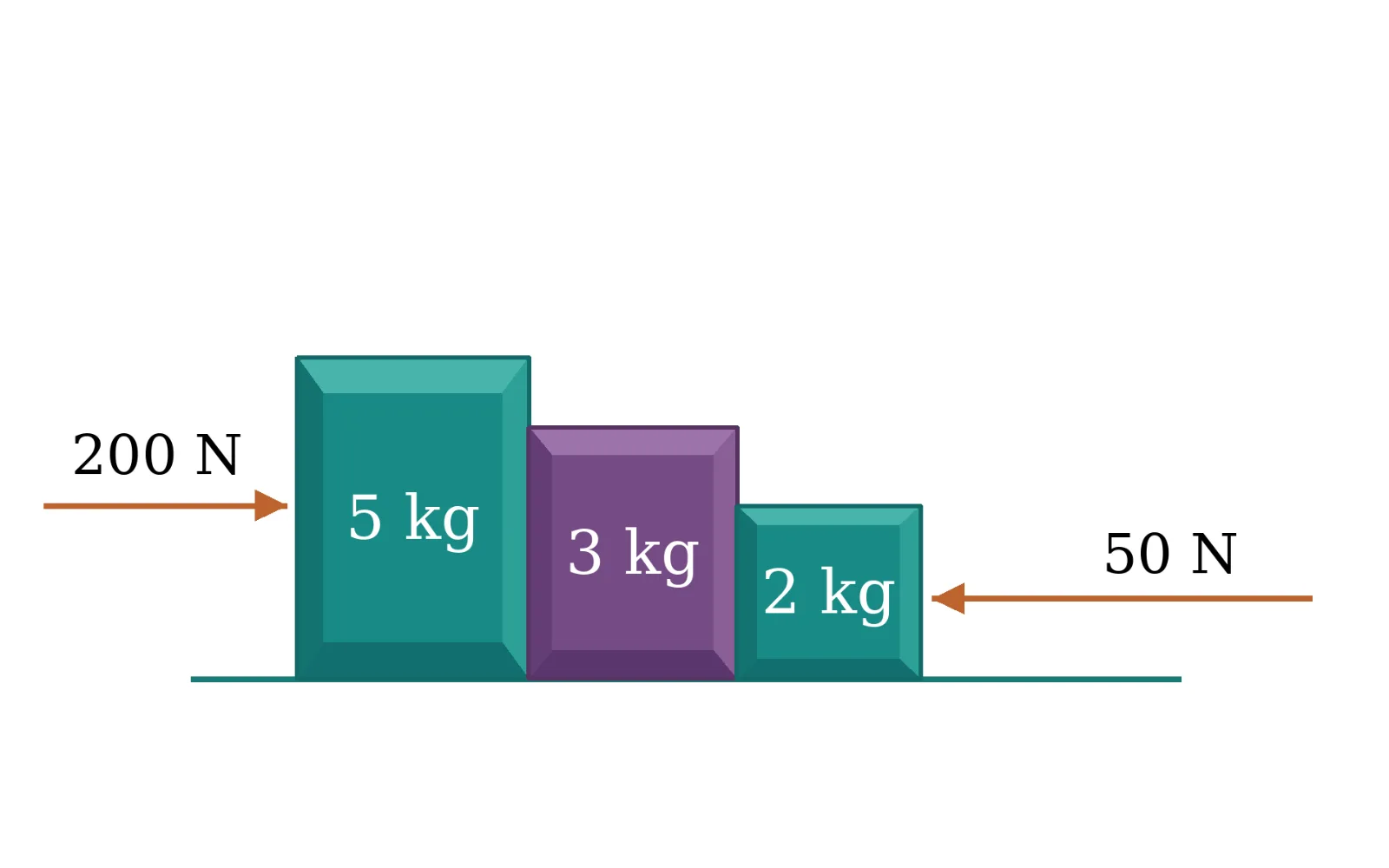
Blocks of 5 kg, 3 kg and 2 kg lie in contact on a smooth floor. A 200 N force acts rightward on the 5 kg block and 50 N leftward on the 2 kg block. Which statements are correct?
Select all that apply
JEE MainsJEE Advanced
Open question & full solution →